Getting your car ready to sell: what actually adds value and what doesn't
Most pre-sale spending does not come back. A small amount of it does, and it is almost never the part people reach for first.
· 6 min read
The instinct before selling a car is to spend money on it. Fix the scratches, have it detailed, get it serviced, put new tyres on. It feels responsible.
Most of it does not come back. Some of it actively wastes money, and one category of effort returns more than all the others put together and costs almost nothing.
The distinction is simple once you see it: you are usually selling to somebody who can do the work more cheaply than you can.
What genuinely pays
Finding the paperwork. This is the highest-return hour you will spend, by a distance. Service records including digital ones held by the manufacturer, MOT history, both keys, the locking wheel nut key, the handbook. A complete file lets a buyer price with confidence. An incomplete one forces them to price uncertainty, and uncertainty is always priced against you, because they must assume the worst plausible version of whatever is missing. Our guide to the documents you need covers the full list.
Finding the second key. Worth looking properly for. Replacing a key on a premium car is expensive enough that every buyer deducts for it, and the deduction will exceed the twenty minutes it takes to search the house.
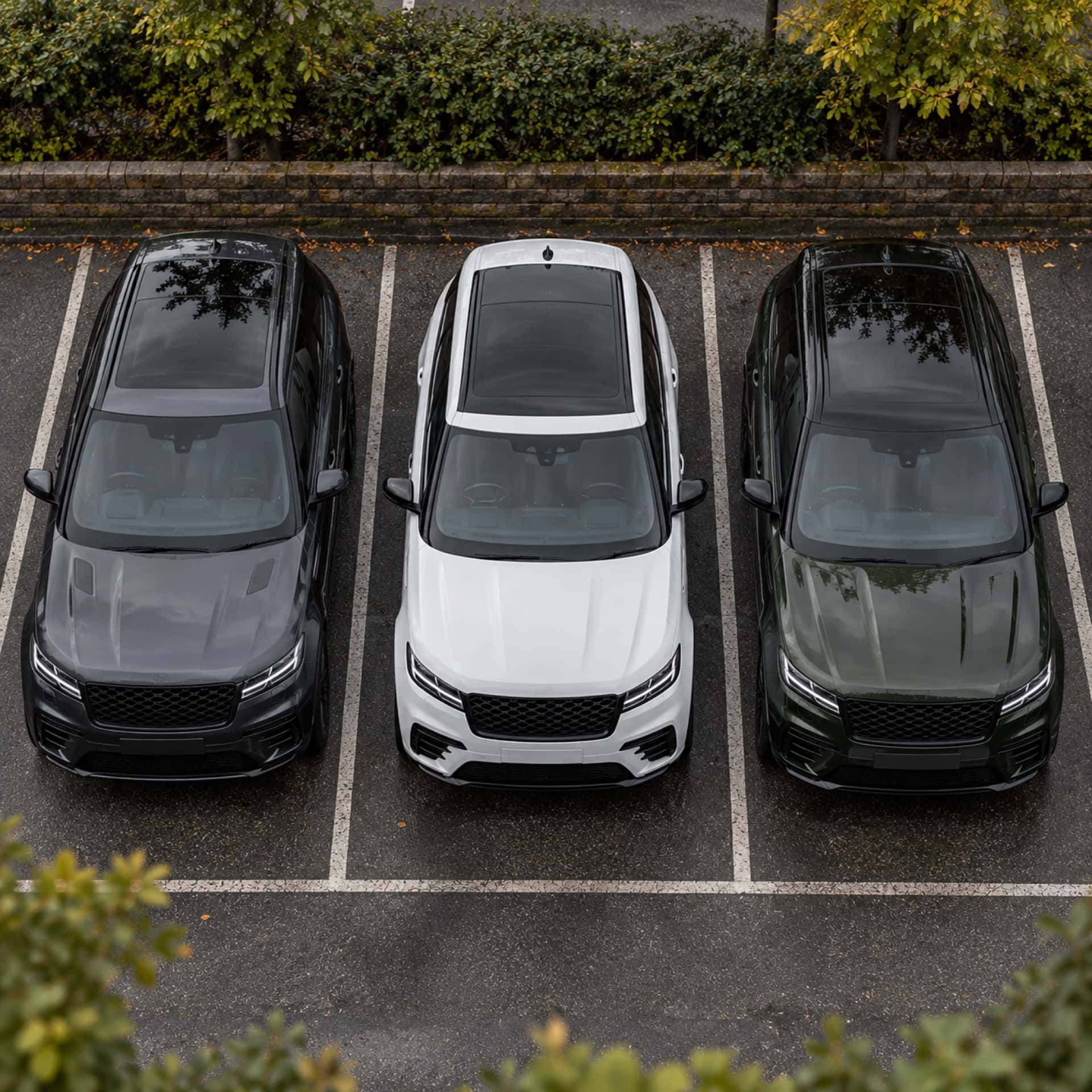
Listing your specification. On a premium car this is worth more than any physical preparation. Owners routinely omit thousands of pounds of options because they stopped noticing them years ago. Find the original order or window sticker. On a Velar, where configuration drives value more than on almost any other Land Rover, this alone can move which bracket the car sits in.
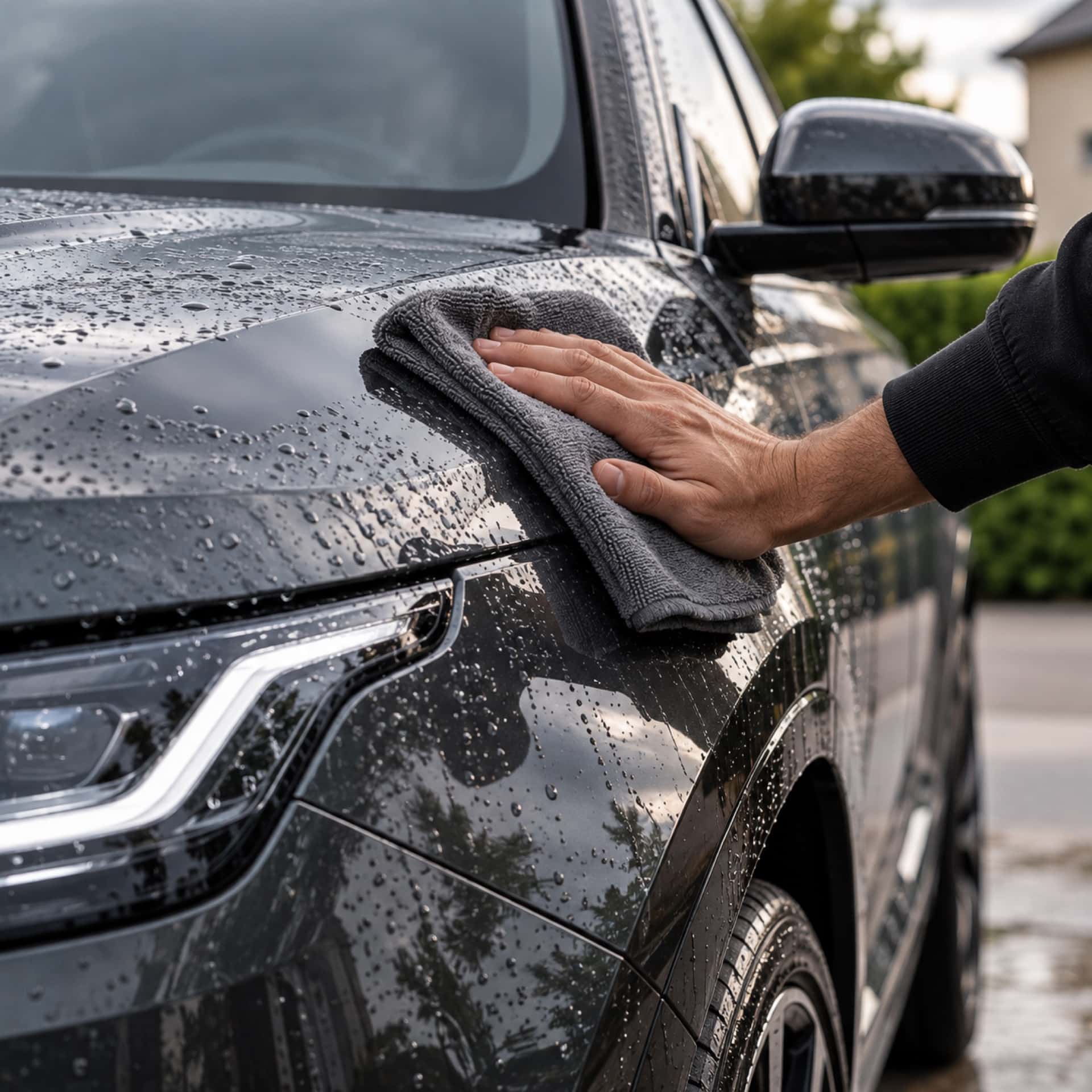
A basic clean. Not a professional detail. Vacuum it, empty it, wash it. This helps for a psychological reason rather than a mechanical one: a car that presents as cared for supports the story your service history is telling. It costs an afternoon.
Removing your private plate, if it is not going with the car, before you start getting valuations rather than after. It avoids confusion at exactly the wrong moment.
What does not pay
A professional detail or paint correction. A trade buyer will prepare the car themselves, at trade rates, and they are not going to pay you retail for work they were going to do anyway. This is the single most common way sellers waste money.
Fixing minor cosmetic damage. Same logic. A scuffed bumper costs you retail to repair and reduces a trade offer by less than that. Kerbed alloys likewise. Describe them honestly and let them be priced in.
A service purely for the sale. If a service is genuinely due it is worth doing, because a car with an overdue service invites questions. A service done six weeks early specifically to look good rarely returns its cost.
New tyres, unless they are illegal or dangerously close to it. Legal tyres with modest tread are fine. New tyres are welcome and rarely move a car into a different bracket.
A fresh MOT when months remain on the current one. You are giving away time you already paid for.
Filling the tank. Nobody has ever paid more for a car because it was full of fuel.
Where it gets genuinely counterproductive
Two things can actively cost you.
A cheap repair to hide something. A poorly matched panel respray, filler over a dent, a warning light cleared without the fault being fixed. Any competent buyer spots all of these, and the moment they do, everything else you have said becomes suspect. A car with an honestly declared dent prices better than a car with a badly hidden one, because the second raises the question of what else you have concealed.
Clearing a warning light before the inspection. It comes back, usually while the car is being checked, and it converts a priced-in fault into a trust problem.
The exception: when you are selling privately
Everything above assumes you are selling to the trade. If you are selling privately, some of the maths inverts, and it is worth being clear about which parts.
A private buyer is not preparing your car, they are buying it to drive. They are also making an emotional decision in a way a trade buyer is not. So presentation genuinely does move a private sale in a way it does not move a trade offer, and a professional detail can pay for itself where it would be wasted on us.
Minor cosmetic repair can also make sense privately, because a private buyer sees a scuffed bumper as a job they will have to arrange rather than as a line in a costing sheet.
What does not change is the paperwork, the second key and the honest description. Those matter in every route, and the honest description matters more privately rather than less, because a private buyer who discovers something after the sale can come back to you in a way a trade buyer cannot.
If you have not decided which route you are taking yet, our comparison of the three sets out the trade-offs, and it is worth deciding before you spend anything, because the right preparation genuinely differs.
The thing that actually moves the number
Describing the car accurately.
That sounds too simple to be the answer, so here is the mechanism. A buyer making an offer is estimating a set of unknowns. Every unknown gets priced pessimistically, because they have to assume the worst plausible case for anything they cannot verify. Each thing you tell them converts an unknown into a known, and knowns price better than unknowns almost every time — including, counterintuitively, the bad ones.
A declared fault is a known quantity with a known cost. An undeclared one is a risk of unknown size. Buyers price risk higher than cost, every time.
This is why we ask what we ask on the phone, and why we would rather hear about the air suspension fault, the stone chip and the child's juice incident up front. It is also how we are able to hold a number: a figure built on facts does not need revisiting, whereas a figure built on assumptions has to be checked when the car arrives. That checking is exactly the moment sellers dread, and it exists because of information that was not shared earlier.
A note on timing
One thing worth saying that costs us nothing to say and is occasionally worth money to you.
If your car is close to a five-year anniversary from first registration, that boundary matters more than most preparation you could do. It is roughly where the export route we describe in why UK cars get exported stops applying, and crossing it changes which market your car is priced against.
We are not going to manufacture urgency about that — no countdowns, no pressure. But if you have been intending to sell in the spring and your car turns five in November, that is a real fact about your position and you should have it.
The short version
Spend an hour on the paperwork. Spend an afternoon cleaning it. Spend ten minutes writing down your specification.
Do not spend money on cosmetic work, servicing or tyres in the hope of recovering it.
Describe the car honestly, including the parts you would rather not mention.
Then get at least three offers, because the difference between the best and worst number you are quoted will comfortably exceed anything preparation could have added.
Tell us what your car actually is, including the awkward parts, and we will give you a firm figure within two hours that does not change when we collect it.