Why UK cars get exported, and what it means for your sale price
Right-hand drive is a limitation almost everywhere and an advantage in a few places. If your car is going to one of those places, it changes what you should be paid.
· 6 min read
Some of the cars sold in Britain do not stay in Britain. If yours is one of them, that fact belongs in the price you are paid, and most sellers never find out it applied to them.
Here is how it works, and — more usefully — how to tell whether it applies to your car.
Right-hand drive is the whole story
Britain drives on the left, so British cars are built with the steering wheel on the right. Most of the world drives on the right, which makes a used British car awkward almost everywhere.
But not everywhere. A minority of countries also drive on the left, and in those places a right-hand-drive car is not a curiosity to be worked around. It is the normal thing, the correct thing, and the thing local buyers actually want.
That single fact is what creates the export market for UK cars. It is not about British cars being better. It is about them already being the right way round for somewhere that has fewer of them than it needs.
The market we actually supply
We supply buyers in Cyprus.
Cyprus drives on the left. Right-hand-drive cars are the local standard. The island has a small domestic market and imports most of what it drives, and the UK is a natural source, because our cars are already correctly configured and there are a great many of them.
We name one market deliberately. Plenty of buying services gesture at "Europe" or "overseas demand" without specifying, and it sounds impressive until you notice that mainland Europe drives on the right and has no particular use for a right-hand-drive Range Rover. We would rather tell you the one place we sell into than imply a continent.
That is set out more fully, including its limits, on our export page.
Why it produces a bigger number
A UK trade buyer prices your car against what a UK retail buyer will eventually pay, minus what they need to make. That is a sound way to run a business, and it is why most offers cluster in a similar place.
When a car is going somewhere else, the relevant question changes. It is no longer what your car is worth in Britain, it is what it is worth where it is going. For the models that market wants, that is a higher number, and the difference is what allows an offer above what a general UK buyer can justify.
There is a second effect worth understanding, and it is more interesting than the first.
A UK-specific problem does not travel. The clearest example is what happened to Range Rover values when theft and insurance costs reshaped demand here — a discount driven by British insurance premiums and British theft statistics simply stops applying once the car is somewhere those premiums and statistics do not exist. We have written up that episode and what changed afterwards in detail. The general principle holds beyond that one case: if your car is discounted in Britain for a British reason, an export buyer is not applying that discount.
What actually happens to a car that gets exported
Worth describing, because "it goes for export" is often said as though it were self-explanatory and it leaves sellers imagining something vaguer and shadier than the reality.
The car is bought outright, in the UK, from you. It is collected and moved to a compound. It is prepared, inspected and loaded, and it travels by sea. At the other end it is imported, taxed under the destination country's rules, registered locally and sold to somebody who wanted exactly that car.
Several things follow that matter to you as the seller.
The transaction with you is complete and final long before any of that happens. You are paid in full before the car leaves your driveway, and nothing that occurs afterwards can come back to you. Export is what happens to the car after it stops being your problem.
The keeper change is recorded with the DVLA in the normal way. Your obligations end when the record changes and your tax is refunded, exactly as they would if the car had been sold to somebody down the road.
And the buyer at the far end is a retail customer, not a trader. That matters commercially, because it means there is one less margin between your car and its final owner than in most UK trade transactions — which is part of why the number can be better.
Which cars this applies to, honestly
Not yours, quite possibly. This is where we would rather be specific than flattering.
Age. The economics work on younger cars. Past about five years, the cost of moving a car stops being justified by what it fetches at the other end, and the route closes. This is a real constraint rather than a policy we could waive.
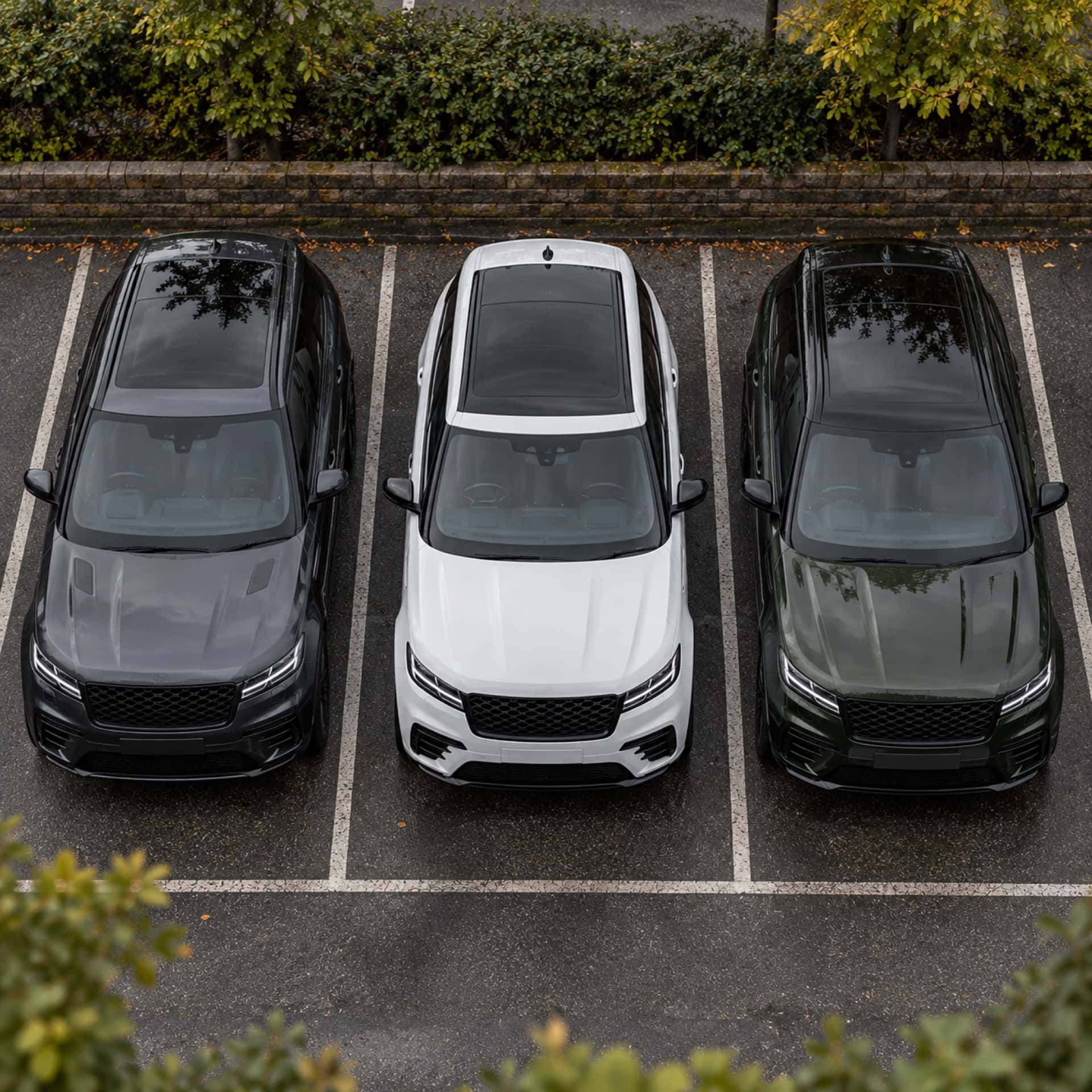
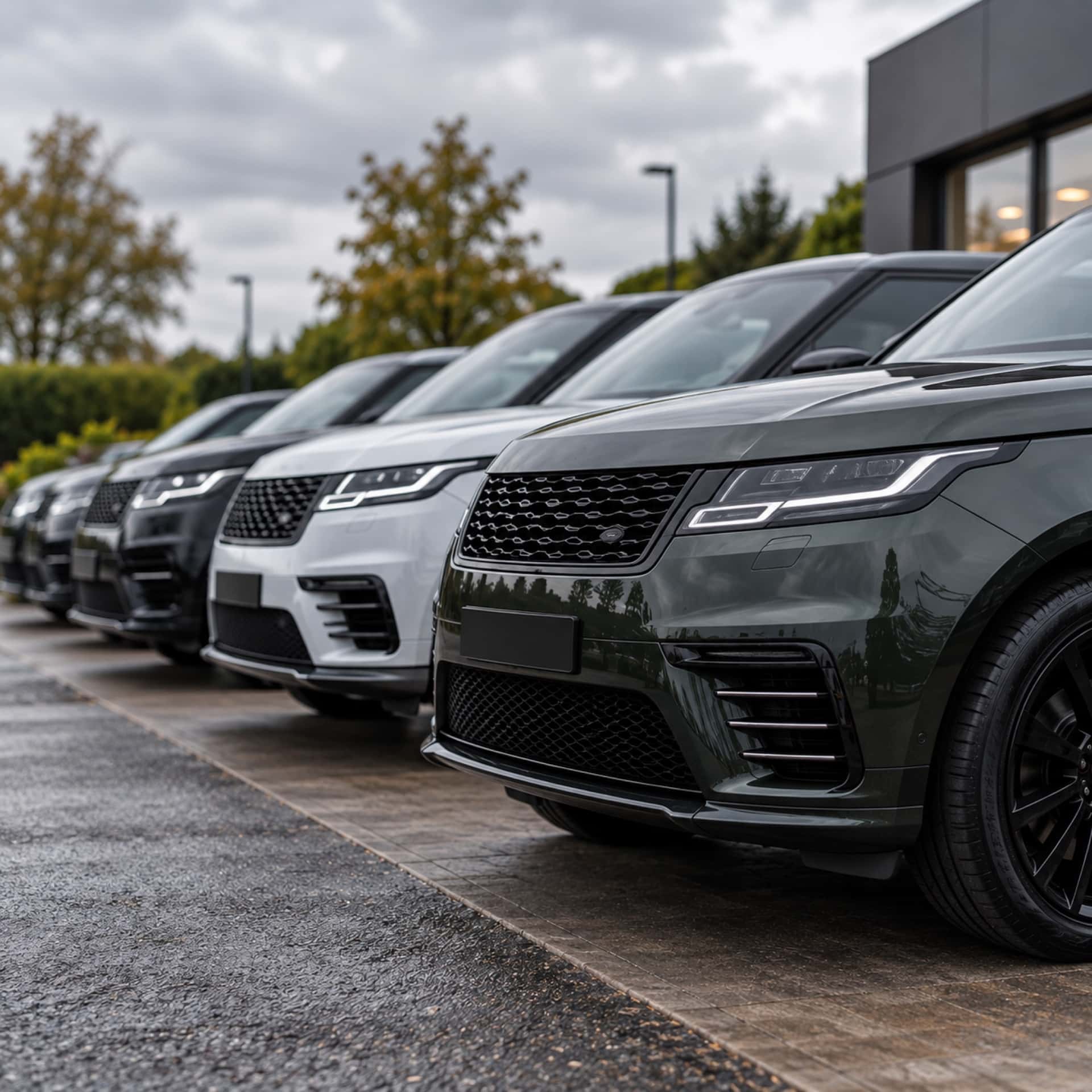
Model. Demand concentrates on premium SUVs. Range Rover and Range Rover Sport, Defender, Evoque, Velar, Discovery Sport, Lexus, Mercedes GLE. A ten-year-old estate car has no export story and we are not going to pretend otherwise.
Specification and condition. Higher-specification cars in good condition travel better. A base-model car in average condition is worth roughly what it is worth here.
If your car meets those conditions, the export route is probably the strongest thing about your position and you should make sure any buyer has priced for it. If it does not, you are selling into the UK trade like everybody else, and a buyer implying otherwise is managing you rather than informing you.
What this means practically when you sell
Ask any buyer where your car is going. It is a fair question, the answer is not confidential, and a buyer who cannot answer it is probably going to trade it on to somebody who can — with a margin taken in between that comes out of your price.
Ask why their number is what it is. A buyer who can explain their reasoning is a buyer whose number is likely to hold. A buyer who cannot is quoting to win the call.
Do not assume export means more, automatically. It means more for specific cars. For everything else it means nothing, and anyone using the word as a general sales pitch is using it as decoration.
Get more than one offer regardless. This is the advice we give on every one of these articles and it costs us business occasionally. A seller with three numbers knows what a good one looks like. A seller with one is guessing, and guessing usually costs more than comparing.
Where your car probably sits
If you have a premium SUV under five years old in decent specification, this is the mechanism that should be working for you, and the Range Rover, Defender and Mercedes GLE pages set out what we look for on each.
If your car is older or outside those models, we still buy it, still collect it free, and still pay before it leaves. The offer is simply priced against the UK trade, and we will tell you that rather than implying a premium that is not there.
We will tell you honestly which of those two your car is, and price it accordingly.